Viking Refrigerator Repair
How to Clean a Viking Stainless Steel Refrigerator, Inside and Out
Clean a Viking stainless steel refrigerator with warm water, a few drops of dish soap and a soft microfiber cloth, wiping along the grain and drying at once. Keep bleach, steel wool and gritty powders off it, then follow a simple schedule for gaskets, coils and the filter.
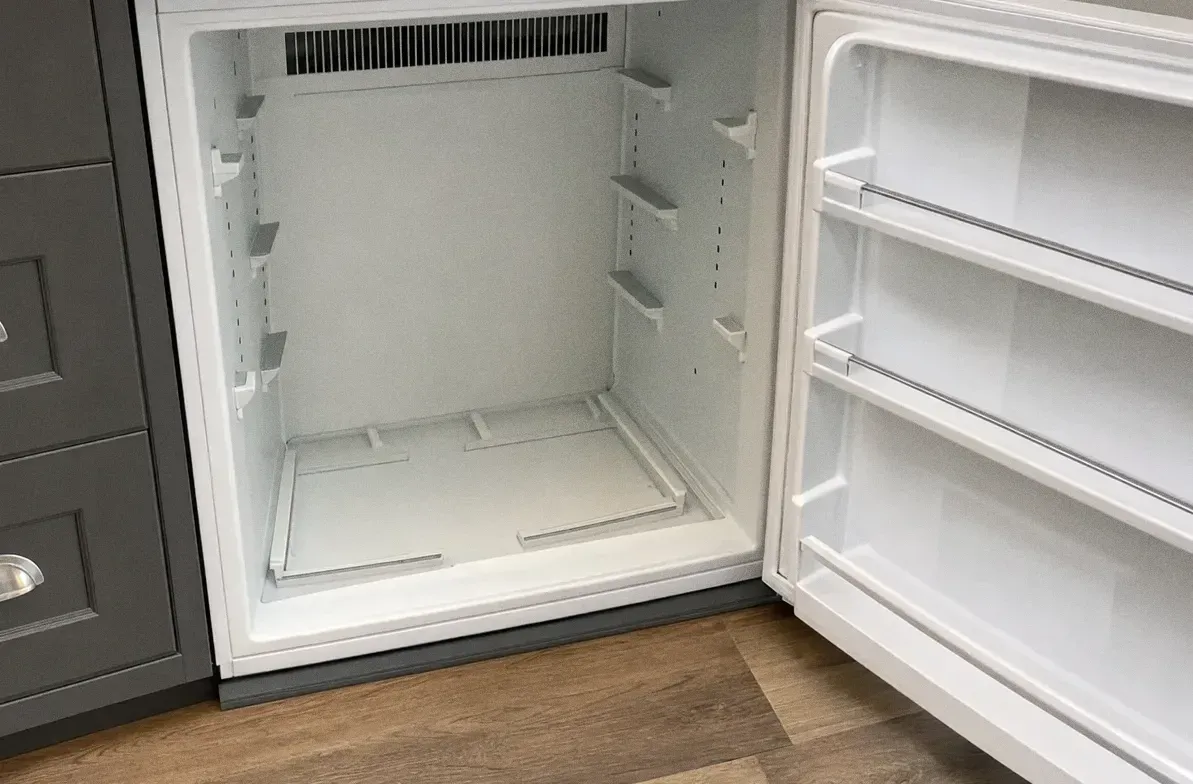
To clean a Viking stainless steel refrigerator, stir a few drops of mild dish soap into a quart of warm water, wipe the doors in the direction of the brushed grain with a soft microfiber cloth, then dry them right away with a second, dry cloth. That handles fingerprints and cooking film on an ordinary week. The shiny front is only half the story, though. A Viking can look spotless while it struggles behind a dusty grille, so this guide pairs the weekly wipe with the quarterly and twice-yearly jobs that keep the cabinet cold and the doors sealed.
In many Boston kitchens the refrigerator sits flush in the cabinetry, which puts the grille and condenser low and out of sight, and easy to forget for years.
What belongs on the stainless, and what never should
Stainless resists rust thanks to a thin, invisible oxide layer. Anything that scratches that layer or attacks it chemically leaves a dull patch no polish will fully hide. The safe kit is short: warm water, a gentle dish detergent, soft cloths, and, for stubborn smudges, a non-abrasive cleaner labelled for stainless appliances.
Keep chlorine bleach, steel wool, scouring pads, powdered cleansers and oven cleaner away from the doors. Chlorides in particular can pit the metal and leave tiny rust-coloured specks, and near the harbour, salt on the air can leave a similar film, so wipe often rather than letting residue sit.
Prefer to skip store-bought products? White vinegar diluted half and half with water cuts greasy prints; follow it with a plain-water pass and a dry cloth. A drop of mineral oil rubbed along the grain leaves a soft sheen that hides the next fingerprints for a while.
On custom panel models with a wood or painted front, treat the panel as cabinetry and keep stainless polish off it.
Following the grain for a streak-free finish
Look closely at a Viking door and you will see fine parallel lines in the metal. Streaks nearly always trace back to rubbing across those lines, using too much product, or letting water dry on its own. Work in this order:
- Lift off crumbs and drips with a damp cloth.
- Wash one section at a time with the soapy water, moving only with the grain.
- Go over it with a cloth dampened in clean water so no soap film remains.
- Dry at once with a fresh microfiber cloth, again along the lines.
- If you use a polish, mist it onto the cloth rather than the door and buff lightly.
Handles collect the most grease. Wrap the cloth around each bar and draw it along the full length. Weekly is plenty unless small hands are involved.
Gaskets and the interior, every three months
Viking’s care instructions for its 5 Series built-ins ask owners to clean the door gaskets every three months, with the same solution that suits the inside of the cabinet. A mild detergent works, or a baking soda mix; Viking’s ratio is 4 tablespoons to each quart of warm water. Push the cloth into the folds, where crumbs settle, then dry them and finish with a very thin coat of petroleum jelly so the rubber stays supple.
While you are there, test the seal. ENERGY STAR recommends making sure door seals are airtight and replacing any that are not. Shut a sheet of paper in the door and tug gently; paper that comes out with no resistance marks a section of gasket that is losing cold air.
Wash bins and shelves in the same baking soda mix, one shelf at a time, and keep abrasive pads off the liner. On VRI all-refrigerators, a Bluezone strip on the display means the Bluezone bulb is due for kit RBZB7; once it is fitted, hold the refrigerator selector key for 3 seconds to clear the alert.
The condenser: the twice-a-year job most owners skip
The condenser sheds the heat your refrigerator pulls out of the food. Under a blanket of dust and pet hair, the compressor runs longer for the same result. USDA food safety guidance tells owners to keep the front grille free of lint so air reaches the condenser, and to brush or vacuum the coil several times a year.
Viking handles this differently by series. The 5 Series uses a Super Clog-Resistant pin-and-tube condenser that Viking calls maintenance-free in normal use; if it does look dusty, vacuum it with an extended narrow attachment. VRI integrated refrigerators flash CL in the temperature display when the coil wants cleaning, about every 6 months; hold the up and down arrows together for 3 seconds afterwards to clear it. The FDREIC, FDFZIC and FDBMIC7360 show CHECK COND. on the same rhythm: hold the power key about 3 seconds to switch off, wait roughly 30 minutes, take off the grille under the door, brush and vacuum gently, then restart and reset the reminder.
Always cut power first, and never pick at the fins with anything sharp.
Water filters, model by model
A tired cartridge slows the dispenser and lets taste through, so the filter belongs in the routine. The RVFFR336 French-door takes RWFRVFFR every 6 months; hold Alarm Off for 3 seconds to reset the icon. VRI integrated units use RWFDISP, at the bottom right behind the door, which twists out a quarter turn counterclockwise; press the lit FILTER button once the new one is seated. FDREIC all-refrigerators use RWFIC. Across that integrated family a cartridge is good for a year, though a busy household can use up its 3,000-litre (792.6 gal) rating first; Replace filter appears when the year is up. The VCSB423, VCBB363 and other older built-ins documented in manual F20413 want a fresh cartridge at nine months or 750 gallons, then three minutes of flushing through the dispenser.
Where a technician takes over
Everything above is safe owner work. A technician measures real fresh-food and freezer temperatures against the settings, checks that the condenser and evaporator fans run at speed, watches a defrost cycle, and looks over the water valve and line for slow seeps. Frost on the back wall, a grinding fan, or a cabinet that keeps warming after a clean coil all call for a diagnosis rather than more scrubbing.
Viking Repair Boston fits factory-approved parts. You pay $95 for the visit itself; that covers the trip out and a complete diagnosis, and the amount is credited to the repair once you say yes. As a rough guide, fan or defrost work on Viking refrigeration typically falls between $290–$720, with a firm figure once the fault is pinned down. Read more on our Viking refrigerator repair page, see the service we offer in Charlestown, or call (781) 456-3468.
Asked on the same call
What is the best thing to clean a Viking stainless steel refrigerator with?
Warm water with a few drops of mild dish soap, applied with a soft microfiber cloth, is the best everyday cleaner for Viking stainless. Move the cloth along the brushed lines, follow with a cloth dampened in plain water, and dry the panel straight away. For heavy fingerprints, spray a non-abrasive stainless cleaner onto the cloth, never directly onto the door.
How do I clean Viking stainless steel without leaving streaks?
Streaks go away when you follow the grain, use very little product and dry the metal before it can air-dry. Most streaking is leftover cleaner or circular rubbing across the brushed lines. Buff the door with a dry microfiber cloth last, and if a haze remains, a single drop of mineral oil on that cloth evens it out.
How do I clean the coils on a Viking refrigerator?
Switch the refrigerator off, remove the grille below the door, and vacuum the condenser gently with a soft brush or a long narrow attachment. Integrated models prompt you every 6 months with CHECK COND. or a blinking CL. On units showing CHECK COND., Viking says to wait about 30 minutes after switching off, then restart and reset the reminder.
How often should I change the water filter in my Viking refrigerator?
Anywhere from every 6 months to once a year, so check your model number first. The RVFFR336 French-door wants RWFRVFFR twice a year. The VCSB423, VCBB363 and similar older built-ins need a new cartridge at nine months or 750 gallons. The integrated FDREIC family can run as long as 12 months.
Can I clean a Viking stainless refrigerator without a stainless steel cleaner?
Yes, dish soap and warm water handle nearly all everyday grime, and white vinegar cut half and half with water lifts greasy fingerprints. Wipe the vinegar off afterwards with clean water and dry the door. Leave bleach, powdered cleansers, scouring pads and steel wool out of it, since they can dull or pit the finish.