Viking Range Repair
Viking Range Warranty: What It Covers and Which Parts to Trust
A Viking range warranty pays only for failures caused by a manufacturing defect, inside the term printed for your model and purchase date, on a range installed correctly and used in a home. After it ends, genuine parts matched to your serial number are the safe way to repair.
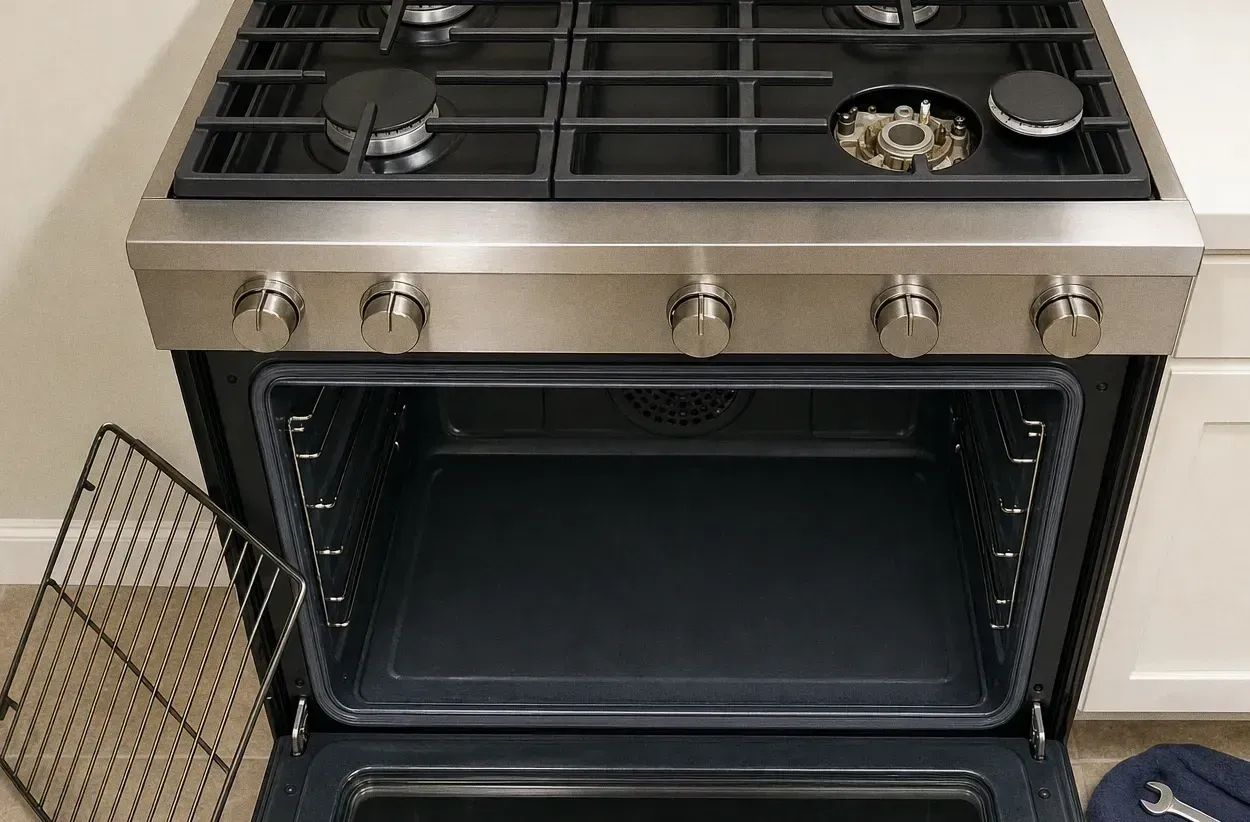
A Viking range warranty pays for parts and labor only when a failure traces back to a defect in how the range was built, and only inside the term printed in the booklet for your product line and purchase date. Before you book anything, take three steps: photograph the model and serial number on the rating plate, find the receipt or installation invoice, and call Viking with both in hand. If the dates still fall inside coverage, let the manufacturer deal with it. If they do not, that same serial number is what gets you the correct replacement part rather than one that almost fits.
The paperwork is often the missing piece. Plenty of condos in the Seaport District and rowhouses in Charlestown change hands with the range left in place, so whoever cooks on it now never saw the original invoice. Coverage counts from the first sale or installation, not from the day you got the keys, so a range that came with the property may have far less time left than it seems.
What the warranty covers and what it leaves out
Premium makers, Viking included, tend to split coverage into two layers. The first is a shorter full warranty on the whole range. The second is longer, limited coverage on a few named components, where the part itself may be paid for but the labor to fit it is not. The booklet for your model lists which parts sit in which layer, and the terms have shifted between product generations, so read the one that shipped with your range rather than a summary you found online.
The exclusions are far more consistent from brand to brand. Expect the warranty to leave out damage from spills, harsh cleaners or impact; scratches and dents not reported at delivery; bulbs, worn gaskets and similar consumables; faults caused by the gas supply, wiring or venting in the house; and any range used in a business. A burner that quits because a boil-over soaked its igniter is a cleaning problem in the warranty’s eyes, not a defect.
What decides whether a claim is accepted
Most refused claims come down to a handful of questions the manufacturer will ask:
- When was it bought? A dated receipt, builder’s invoice or closing statement settles the start date. Registering the range with Viking helps, but a receipt usually carries more weight.
- Was it installed properly? The range must be set up for the gas it actually burns, natural gas or propane, with the matching orifices, a level stance, the anti-tip bracket fitted and the clearances in the installation guide respected.
- Who has worked on it? Repairs made outside the maker’s own service network during the coverage period can give the manufacturer grounds to refuse a later claim on the same system.
- How is it used? Home cooking only. Catering or rental-kitchen use usually ends coverage.
Viking Repair Boston is an independent repair shop, separate from Viking itself. So while your range is clearly inside its term, the sensible first call is to Viking. An independent shop makes more sense once that window has closed, or when the fault is one the warranty excludes anyway.
Finding the model, serial and part number
Every Viking range carries a rating plate showing the model number, the serial number and the gas type. On most freestanding ranges it sits behind the removable kick panel at the bottom front, or on the oven frame where you can see it with the door open; your owner’s manual names the spot. Photograph the whole plate instead of copying it by hand, because one misread character sends you to the wrong parts diagram.
Look parts up by those numbers, never by description. Two ranges that look identical from the front can use different burners, valves or boards because they came from different production runs, and the serial number is what tells them apart. Part numbers also get superseded: when Viking revises a component, the old number is retired and points to the newer part, which may look slightly different from the one you pulled out. That is normal, not a mistake in your order.
Check the old part as well. Many igniters, valves and control boards carry a printed or stamped number, and comparing it with the diagram for your serial number is the quickest sanity check before you spend money.
Genuine or aftermarket: where it matters
Genuine parts are made to the drawing the range was designed around. Aftermarket parts are made to fit as many models as possible. For some pieces that difference barely registers, and an oven rack, a knob insert or a correctly rated bulb is fine from either source.
For anything that handles gas or heat, it matters a great deal. A gas oven’s hot-surface igniter doubles as a safety device: the oven valve opens only once the igniter draws enough current to prove it is hot. A universal igniter that draws slightly less can glow brightly yet leave the valve shut, or open it late, which shows up as endless preheats or a soft whoomp when the burner lights. Surface spark igniters, the spark module, oven thermostats and temperature sensors are matched to the controls that read them in the same way. Factory-approved parts on those components keep the range behaving as designed.
If constant clicking or burners that refuse to light sent you hunting for parts, read our guide to Viking ignition faults first. A wet igniter and a failed one look the same from the cooktop, and only one of them needs a new part.
Out of warranty: what repairs usually run
Once coverage has lapsed, the bill depends on which system failed. These are typical ranges, and the firm quote comes after diagnosis:
- Igniter or burner assembly: $270–$630
- Oven thermostat or heating element: $240–$730
- Control board or touch panel: $370–$920
The visit itself is a flat $95. It pays for the diagnosis, and that amount is taken off the repair if you decide to go ahead. For comparison, a comparable new Viking unit, appliance only, typically runs $6,820–$12,090 before anyone installs it. Against that, even a control board is a modest fraction, which is why a single failed part on a sound range is usually worth fixing. Replacement starts to make sense when the oven cavity is rusting through, several systems are failing together, or parts for an older generation are no longer made.
If you would rather have the part identified for you, Viking range repair starts with that diagnosis, and oven-side faults are covered under Viking oven repair.
Before you pick up the phone
Have these ready, whether you are calling Viking or calling us on (781) 456-3468:
- A clear photo of the rating plate.
- The receipt, invoice or closing document showing when the range was bought or installed.
- A short note of the symptom: which burner or oven function, when it started, and any code on the display.
- Anything you know about earlier repairs and which parts were changed.
One exception to all of this: if you smell gas, do not try to light a burner or test anything. Leave the house and call your gas utility from outside.
Asked on the same call
Does the Viking warranty carry over if the range came with the house?
Possibly, but the wording in the warranty booklet for your range decides it, and the clock always runs from the first sale or installation rather than from your move-in date. Ask the seller or the builder for the original invoice, then call Viking with the serial number from the rating plate to confirm how much coverage is left and whether it follows a new owner.
Will an aftermarket part void my Viking range warranty?
Fitting a non-genuine part does not cancel the whole warranty by itself, but if that part caused or contributed to a failure, the manufacturer can refuse to pay for the damage. While the range is still covered, let Viking handle repairs. After coverage ends the warranty question disappears, yet gas and ignition parts should still match the original specification.
Where is the model and serial number on a Viking range?
Look for the rating plate behind the removable kick panel at the bottom front, or on the oven frame with the door open; the exact spot varies by model and the owner's manual shows it. Photograph the whole plate, because it also lists the gas type, which matters when ordering valves and burner orifices.
Where can I get the right Viking stove parts?
Order from the parts diagram that matches your model and serial number, either through Viking's own parts channel or a distributor that lists genuine Viking part numbers. Order by number, never by photo alone, and do not be surprised if a newer superseding number arrives in place of the one printed on the old part.
What does a Viking range repair cost once the warranty has ended?
It depends on which part failed: an igniter or burner assembly typically runs $270–$630, an oven thermostat or heating element $240–$730, and a control board or touch panel $370–$920. A flat $95 visit comes first, pays for the diagnosis, and is taken off the bill if you approve the repair; the firm quote follows that diagnosis.